Residential Electrician vs Commercial Electrician: The Difference
Residential electrician vs commercial electrician. What’s the difference between these professions? Learn more about them here.
If being an electrician is something you would love to do for a living, it’s a good career path.
Under it, there are many specialty areas to choose from.
For instance, you can become an industrial electrician, commercial electrician, or residential electrician.
The responsibilities or duties of these specialties are different, and their work environment are different.
So you have to know how they differ from one another to help you make a fitting choice.
For the purpose of this post, we’ll focus on residential electrician vs commercial electrician.
We’ll define residential and commercial electricians, point out key differences between them, and explain how to choose a specialty and whether you can move to another specialty.
What Is a Residential Electrician?
A residential electrician works inside homes, apartments, and other living spaces.
Their main job is to set up and keep safe all the wires and parts that carry electricity, like wiring, outlets, lights, panels, and more.
An article published by O*NET Online shows that electricians must make sure all installations match local building codes.
In new home projects, residential electricians follow blueprints or electrical plans.
They install wiring, circuit breakers, switches, and boxes. They often team up with architects, contractors, or supervisors to ensure everything fits the design and rules.
In existing homes, they move in to find what’s wrong, maybe a short circuit, broken wire, or bad fixture, and fix it.
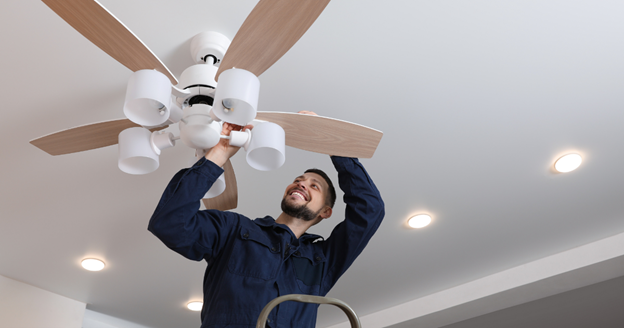
They might also add new features like ceiling fans or extra outlets. They speak with homeowners, hear their needs, suggest safe options, and carry out the work.
Electrician jobs are growing fast, with an expected 9 percent growth from 2024 to 2034. This is much faster than the average for all occupations.
The U.S. Bureau of Labor Statistics predicts about 81,000 openings per year over the next decade.
This is to ensure safe and reliable power inside homes while following the local safety rules and codes.
What Is a Commercial Electrician?
A commercial electrician works in non-residential sites like office buildings, stores, factories, or schools.
They plan, install, and repair electrical systems that support bigger loads and more complex devices than in homes.
In new commercial construction, they read blueprints, place wiring, fit panels, and ensure all systems meet local safety codes.
They usually work with architects, general contractors, and engineers to line everything up properly.
For existing buildings, their work includes maintenance, repairs, and upgrades.
Because commercial systems tend to be larger and more complex, tasks might involve installing transformers, rewiring high-capacity circuits, or fitting machinery power supplies.
As businesses grow or adopt new tech, commercial electricians may be called on to install new wiring to support modern equipment.
Basically, a commercial electrician’s work is bigger, more challenging, and built for business settings.
And it’s always pointing toward safety, efficiency, and following the rules.
Differences Between Residential and Commercial Electricians
When you compare residential and commercial electricians, you see real differences in training, project scale, and electrical systems.
Training & Certification
Both kinds start with the same basics: a high school diploma or GED, technical courses, and an apprenticeship programs that cover wiring, safety, and the National Electrical Code (NEC).
But commercial electricians usually take extra training or get special certificates because their work is more complex.
Project Size & Difficulty
Homes have smaller electrical demands and simpler layouts. Commercial buildings, like shops, offices, factories, need much more power and design work.
The complexity of the job is higher in commercial settings.
Types of Electrical Systems
Residential electricians usually work with single-phase systems, which handle voltage levels like 120/240V and are enough for homes.
Commercial electricians often use three-phase systems, which are more efficient for large buildings and heavy machinery.
These systems manage higher loads and smoother power flow.
Because commercial work involves bigger installations, heavier power, and stricter rules, electricians there must have more experience and a deep understanding of complex systems.
As mentioned, for both professions, you need to complete a state-approved apprenticeship program and have knowledge of local codes to be eligible for a license.
Also, each of them works with unique tools and toolsets used on the job every day.
Residential and Commercial Electrician: Which Should You Go for?
Here are some steps to follow to help you weigh your decision on which career specialty to pursue:
1. Choose which career you prefer the most
If you prefer to work in a bigger building, like restaurants, retail stores, malls, hospitals, and others, you should build yourself to become a commercial electrician.
But if you’re the type who prefers to work on home electrical systems, different from large family homes, apartment complexes, or townhomes, go for a residential electrician.
2. Consider whether you like communicating directly with clients
Residential electricians communicate directly with homeowners and their families.
This means you need to be comfortable in other people’s homes and to make conversation as you complete jobs.
Also, you need to respect their private spaces.
If you prefer not to work directly in private homes, you’d better be off as a commercial electrician.
But you might still work alongside commercial building employees or building contractors.
3. Check which specialty meets your salary goals
Commercial and residential electricians receive different salary amounts.
This is caused by factors like location and skill level.
Look at job openings in your area or check online to know which electrician specialty best matches your financial needs, and narrow down your selection.

Can You Switch From One Field To Another?
Yes, switching fields is possible. But you’ll need to adapt your knowledge, get new practical experience, and sometimes complete extra certifications.
A commercial electrician moving to residential work already knows high-voltage systems and complex wiring.
But since residential wiring uses different setups (like lower voltages and simpler layouts), taking a residential training course or certificate is recommended before taking on home jobs.
In the same way, a residential electrician who wants to enter commercial settings must build skills for three-phase power systems, large circuits, and machinery wiring.
To succeed, they may need additional training or even a commercial electrician apprenticeship.
This lets you have more confidence as you explore your new specialty.
Conclusion
The residential electrician vs commercial electrician difference is significantly clear, especially in their scope of work and qualifications.
The residential electrician usually handles electrical home repairs and installations for contracting companies or homeowners.
A commercial electrician handles much larger electrical systems outside homes.
They’re mostly the ones called to install electrical systems in newly built homes, buildings, and malls.