AI SEO Strategy: Aligning Content Technical SEO and AI Visibility

Learn how to align content, technical SEO, and strategy to improve AI visibility and citations. A practical guide to building a unified AI SEO strategy.
Your content team publishes great articles. Your technical team maintains perfect Core Web Vitals. Your AI visibility is still zero. The problem is that these
teams operate in separate silos with separate goals. No one owns the intersection.
AI SEO strategy requires alignment between content, technical SEO, and AI visibility.
Treating them as independent workstreams guarantees none of them delivers on the AI search potential.
Search behavior is shifting quickly. Today, content must be optimized not only for traditional search engines but also for AI-driven search platforms that generate answers directly for users.
This is where you need AI search optimization. It’s essential. It focuses on structuring content, technical infrastructure, and authority signals so AI systems can discover, understand, and cite your content in responses.
This guide explains how content strategy, technical SEO, and organizational alignment work together to improve AI visibility and AI search performance.
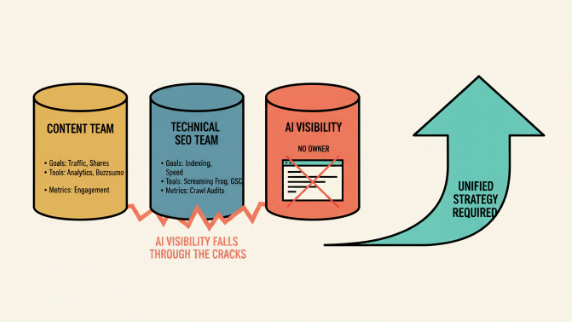
with no owner bridging the gap
Key Takeaways
- AI SEO requires alignment between content strategy, technical SEO, and AI visibility.
- Most organizations struggle because these teams work in separate silos with different goals.
- AI engines cite content that is easy to retrieve, well-structured, and technically accessible.
- A unified strategy should include shared KPIs, retrieval-friendly content architecture, and AI-ready technical infrastructure.
- Organizations that align these functions gain more AI citations and stronger search visibility.
What Most Marketing Organizations Get Wrong
Content teams optimize for engagement and traffic. Technical SEO teams optimize for crawlability and speed. Neither team optimizes for AI citation.
The result is a site that performs well in traditional search but remains invisible to AI engines.
The silo problem runs deeper than org charts. Each team uses different tools, different metrics, and different success criteria. Content success means pageviews.
Technical success means passing audits. AI visibility has no owner and no dashboard.
Even teams that recognize the AI opportunity often assign it to one silo. Content creates “AI-friendly” articles without technical support.
Technical teams add schema without content strategy alignment. Neither approach works in isolation.
AI search visibility requires a unified strategy that no single team or function can deliver alone.
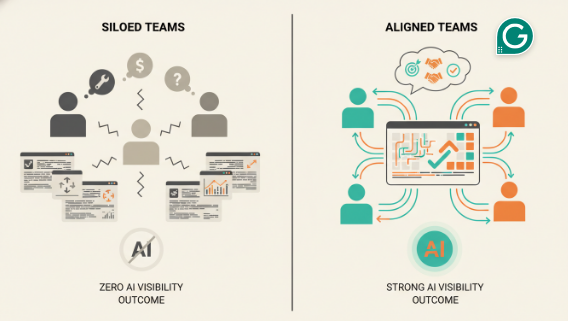
AI visibility metrics and coordinated execution
Criteria for a Unified AI SEO Strategy
If your goal is consistent AI citations and visibility, your strategy needs structure.
The following criteria outline what a truly unified AI SEO approach looks like when content, technical systems, and measurement work together.
1. Shared KPIs Across Functions
Content, technical, and AI visibility teams need shared metrics.
AI citation count, AI-referred traffic, and share-of-voice in AI responses should appear on every team’s dashboard.
Without shared KPIs, each function optimizes for its own goals at the expense of AI visibility.
2. Content Architecture Designed for Retrieval
Content strategy must account for how AI retrieval systems extract information.
Topic clusters, internal linking patterns, and page structure all affect whether AI engines can find and cite your content.
A comprehensive AI engine optimization strategy aligns content architecture with retrieval mechanics from the planning stage.
3. Technical Foundation for AI Crawling
Your technical stack must accommodate AI-specific crawlers.
Server-side rendering, proper robots.txt configuration, fast response times for AI bots, and comprehensive structured data form the technical foundation.
Without these, your best content never reaches AI indexes.
4. Integrated Content and Schema Workflows
Schema markup should be part of the content creation process, not an afterthought.
Content briefs should specify required schema types. CMS templates should enforce structured data.
This integration ensures every published page is machine-readable from day one.
5. Cross-Functional Review Cadence
Establish monthly reviews where content, technical, and AI visibility leads examine performance together.
Review AI citation data alongside content metrics and technical health.
Identify where technical gaps block content visibility or where content gaps undermine technical investments.
6. Attribution Across the Full Funnel
Track how AI visibility impacts downstream metrics: leads, conversions, revenue.
Connect AI citations to traffic, traffic to engagement, and engagement to business outcomes.
This attribution chain justifies continued investment and guides resource allocation.
Practical Tips for Breaking Down Silos
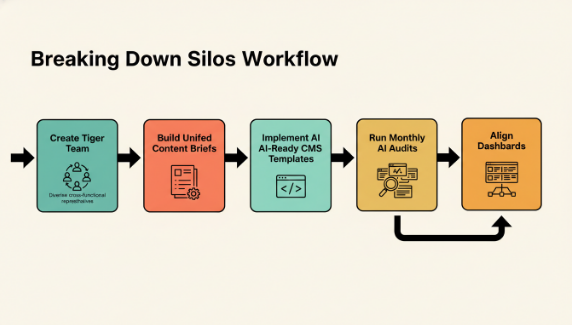
ready CMS templates, monthly audits, aligned dashboards
Once you understand the strategy, the next step is execution.
These practical steps help teams coordinate their work so that content, technical SEO, and AI visibility efforts reinforce each other rather than operate separately.
1. Create an AI Visibility Tiger Team
Pull one representative from content, technical SEO, and analytics into a dedicated working group.
This team meets weekly to review AI citation data, coordinate optimizations, and resolve cross-functional blockers.
2. Build Unified Content Briefs
Every content brief should include technical requirements: target schema types,
heading structure, internal linking targets, and AI query mapping. This prevents content from being published in a format that technical SEO later needs to retrofit.
3. Implement AI-Ready CMS Templates
Work with your development team to create page templates that enforce AI-friendly structures by default.
Required heading hierarchies, automatic schema injection, and structured section formats reduce the manual effort of AI optimization.
4. Run Monthly AI Search Audits
Dedicate time each month to running your top queries through every major AI platform.
Cross-reference results with your content inventory and technical health data.
This unified audit reveals where alignment gaps are costing you citations.
Pair this with an AI engine optimization measurement framework that tracks progress across all three functions.
5. Align Reporting Cadences and Dashboards
Put content performance, technical health, and AI visibility metrics into a single dashboard.
Present this unified view to leadership.
When executives see how the pieces connect, they fund cross-functional collaboration instead of siloed initiatives.
Conclusion: Siloed Teams Cannot Win in AI Search
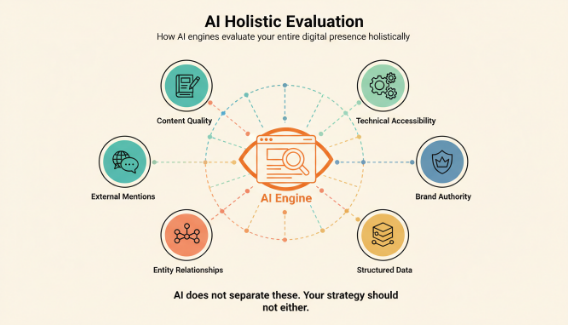
quality, technical accessibility, brand authority, structured data all at once
The companies winning in AI search are not the ones with the best content or the best technical infrastructure.
They are the ones where content and technical teams work toward shared AI visibility goals.
AI engines evaluate your entire digital presence holistically.
They do not separate content quality from technical accessibility from brand authority. Your strategy should not separate them either.
The competitive advantage goes to organizations that align fastest.
Every month your teams spend in silos is a month your competitors use to build integrated strategies that compound their AI visibility.
FAQ: AI SEO Strategy
What is AI SEO strategy?
AI SEO strategy is the process of aligning content, technical SEO, and authority signals so AI search engines can discover, understand, and cite your content in generated answers.
Why do most companies struggle with AI visibility?
Most organizations separate content, technical SEO, and analytics teams. Without shared metrics or coordination, no team focuses on AI citation performance.
What metrics matter for AI search visibility?
Important metrics include:
- AI citation count
- AI-referred traffic
- Share of voice in AI answers
- Engagement from AI-generated traffic
How can companies improve AI search visibility?
Companies improve AI visibility by aligning:
- Content architecture
- Technical accessibility
- Structured data
- Cross-team collaboration
When these elements work together, AI systems are more likely to incorporate the content into their answers.