Are Commercial Roof Repairs Tax Deductible?
Are commercial roof repairs tax deductible? Learn when roof repair costs may be deductible, when they must be capitalized, and what records to keep.
Are commercial roof repairs tax deductible?
In many cases, it can be, but it depends on what work was done and how the IRS classifies that work.
A small repair that fixes a leak may be treated differently from a complete roof replacement that adds value or extends the building’s useful life.
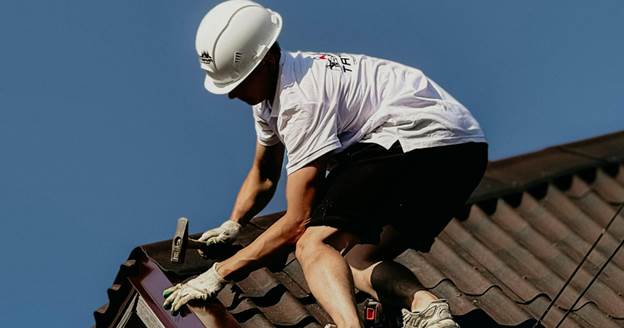
For example, a business owner who pays for a damaged roof section to be repaired may have a current business expense.
But replacing the entire roof can be treated as a capital improvement instead.
The IRS says business property costs generally need to be examined to determine whether they are repairs and maintenance or improvements.
Working with an experienced commercial roofing contractor College Station can also help to keep the estimate and scope of work.
Those documents can give your tax professional useful details about what was actually repaired.
So, what makes one roofing expense deductible while another must be depreciated?
When Are Commercial Roof Repairs Tax Deductible?
The IRS generally allows businesses to deduct ordinary and necessary expenses related to operating their business.
This can include qualifying repair and maintenance costs.
A commercial roof repair may qualify when the work simply keeps the existing roof in normal working condition.
Examples can include:
- Repairing a small roof leak
- Patching damaged roofing material
- Fixing flashing around a roof penetration
- Repairing a limited area damaged by weather
- Sealing cracks or leaks
- Replacing worn or minor roofing components
The question is whether the work repairs the existing property rather than improving or substantially restoring it.
The IRS has specifically described repairs such as sealing cracks and leaks as examples of costs that may be currently deductible when they do not improve the property.
When Is a Roof Expense a Capital Improvement?
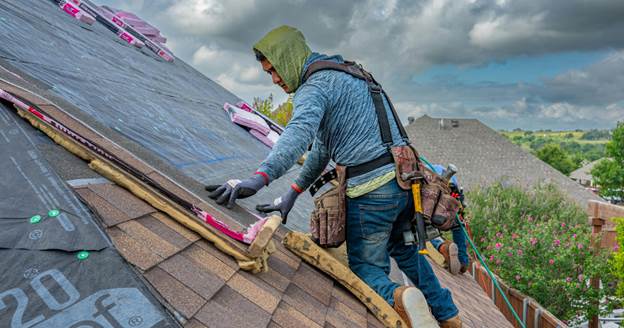
The IRS generally requires businesses to capitalize costs when the work results in a betterment, restoration, or adaptation of property.
Instead of deducting the entire amount immediately, the business generally recovers the cost through depreciation or another applicable tax treatment.
A major roofing project may fall into this category.
For example, replacing an entire commercial roof is different from patching one damaged section.
IRS guidance gives a new roof as an example of an improvement that may need to be depreciated.
A project is more likely to be treated as an improvement when it:
- Replaces a major part of the building
- Restores the property after significant damage
- Increases the property’s value
- Extends its useful life
- Increases its capacity or performance
- Changes the property for a new use
This distinction matters because a $10,000 repair and a $100,000 roof replacement can have very different tax treatment.
Repair vs. Roof Replacement: What’s the Difference?
Think of it this way:
Repair: You fix something that is broken so the roof can keep doing what it was already designed to do.
Improvement: You make a substantial change that restores, upgrades, or changes the property in a way covered by the capitalization rules.
For instance, repairing a leaking area after a storm may qualify as a repair. Replacing the entire roof may be considered an improvement.
However, the dollar amount alone does not decide the tax treatment.
A large repair does not automatically become a capital improvement, and a smaller project does not automatically qualify as a deduction.
The facts and circumstances matter.
This is one reason a detailed roofing invoice is important.
What About Commercial Roof Replacement?
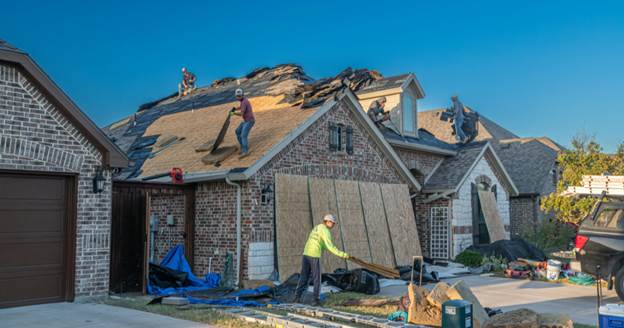
If you’re planning a commercial roof replacement College Station business owners should not automatically assume the full project can be deducted in the year it is paid.
A complete replacement can be treated as an improvement because it may restore a substantial part of the building and extend the property’s useful life.
IRS guidance specifically gives replacement of an entire roof as an example of an improvement.
That does not mean the cost provides no tax benefit.
Instead, the cost may generally be recovered over time through depreciation, subject to the applicable tax rules.
For a commercial roof replacement Bryan project, the same basic federal tax principles apply.
The location of the building does not by itself determine whether the expense is a repair or improvement.
Your tax professional should review the actual project, your business structure, the property, and the tax year involved.
What Records Should You Keep?
Good records can make tax reporting much easier.
Keep documents such as:
- The roofing estimate – Shows what work was proposed.
- The final invoice – Shows what you actually paid.
- The scope of work – Explains which parts of the roof were repaired or replaced.
- Photos – Can document the roof’s condition before and after the work.
- Inspection reports – May explain why the work was needed.
- Insurance documents – Useful when storm or other covered damage is involved.
- Payment records – Show when and how the expense was paid.
If you’re comparing bids from a commercial roofing contractor Bryan, ask for a detailed description of the work rather than an invoice that simply says “roofing.”
A detailed record gives your accountant or tax prepare better information when determining the appropriate tax treatment.
What If Insurance Paid for the Roof Damage?
Insurance can add another layer to the tax calculation.
Suppose a storm damages a commercial roof.
The business receives an insurance payment and then pays a contractor to repair the roof.
The tax treatment can depend on factors such as the amount received, the amount spent, the property’s basis, and whether the work is classified as a repair or improvement.
This is a situation where keeping the insurance settlement, contractor invoices, receipts, and property records together is especially useful.
Don’t treat the insurance payment and roofing expense as completely separate issues without asking your tax professional how they interact.
Conclusion
So, are commercial roof repairs tax deductible?
Yes, commercial roof repairs can be tax deductible, but not every roofing expense qualifies for an immediate deduction.
The biggest distinction is between a repair or maintenance expense and a capital improvement.
Generally:
- Minor repairs and maintenance may be currently deductible.
- Major improvements and complete roof replacements may need to be capitalized and depreciated.
- Routine maintenance may qualify under specific IRS rules.
- Safe harbors may help qualifying businesses with certain costs.
- Good documentation is important in all cases.
The IRS rules can become complicated when a roofing project includes both repairs and improvements.
If you’re unsure how a particular commercial roofing bill should be treated, give your tax professional the invoice, scope of work, photos, and payment records before filing your return.
That small step can help you claim legitimate deductions without treating a major improvement as an ordinary repair.